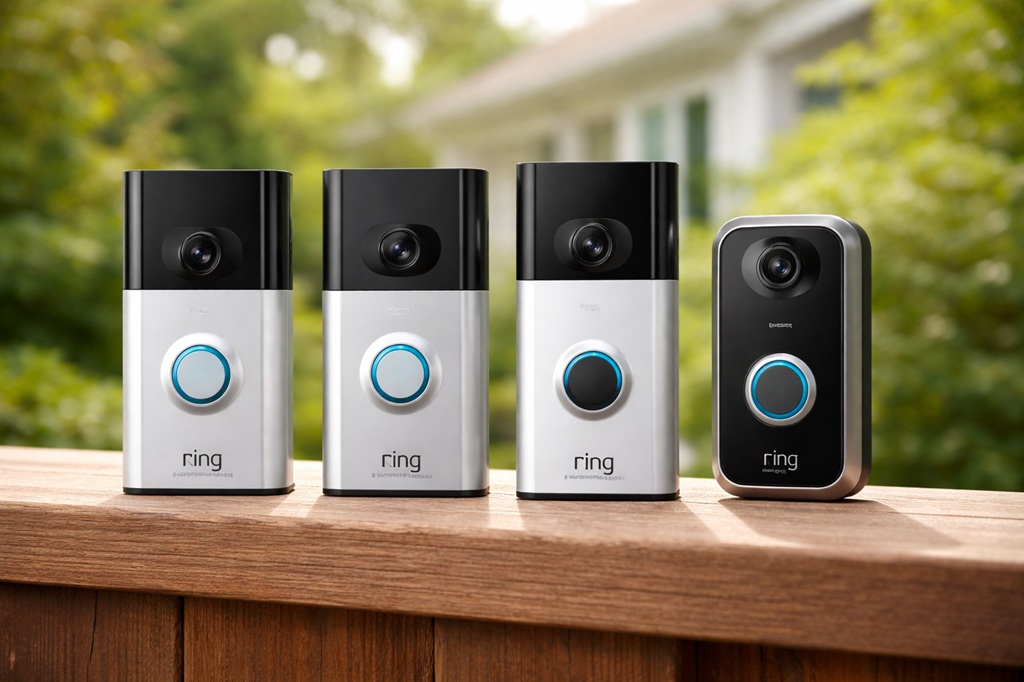
Selecting a video doorbell should be a straightforward decision, but the sheer breadth of choices can quickly complicate things. Few brands illustrate this better than Ring, whose video doorbell lineup now spans multiple power types, price points, form factors, and feature tiers. At a glance, many of these devices appear similar. In daily use, however, their differences can meaningfully shape how well they fit into a particular home, apartment, or lifestyle.
This guide breaks down every major Ring video doorbell currently available, focusing on how each model is positioned, what it does well, where it falls short, and who it is best suited for. Rather than listing specifications in isolation, the goal here is to clarify tradeoffs and practical implications so buyers can make a confident, informed choice without second-guessing their purchase later.
Understanding Ring’s Doorbell Ecosystem Before Choosing
Before looking at individual devices, it helps to understand how Ring structures its ecosystem. Ring video doorbells are designed to work closely with the Ring mobile app, which acts as the control center for live viewing, notifications, recordings, and advanced detection features. Over time, Ring has steadily expanded app capabilities and often backports new features to older hardware, extending device longevity.
That flexibility comes with an important caveat. Most meaningful functionality beyond basic live viewing depends on a Ring Home subscription. Features such as extended video history, person detection, package alerts, and advanced motion notifications are tied to monthly plans. Pricing currently ranges from a low-cost single-device tier to higher tiers covering multiple cameras and extended retention periods. While the entry-level plan remains relatively affordable, it is still an ongoing cost that should factor into any purchasing decision.
From a hardware perspective, Ring organizes its lineup into three main categories:
- Battery-powered doorbells
- Wired doorbells
- A specialty apartment-focused model
Each category addresses different installation constraints and usage patterns, which is why Ring has maintained such a broad range rather than consolidating around one or two models.
Battery-Powered Ring Doorbells: Flexibility First
Battery-powered doorbells represent the most popular entry point into the Ring ecosystem. They appeal to homeowners and renters alike because they require minimal installation and can be mounted without existing wiring. Recent generations have also addressed long-standing complaints around video framing and resolution.
Ring Battery Doorbell Plus: The Practical Middle Ground
The Ring Battery Doorbell Plus marked a turning point for Ring’s battery lineup by introducing a square 1:1 aspect ratio. Earlier generations relied on a 16:9 frame, which often captured faces but missed packages placed on the ground. The shift to a head-to-toe view significantly improved everyday usefulness, particularly for delivery monitoring.
Video resolution was also upgraded to 1536p, moving beyond the long-standing 1080p ceiling that had drawn criticism as competitors pushed into higher-resolution territory. Daytime footage appears crisp and detailed, while night performance benefits from solid infrared capabilities and support for color night vision under the right conditions.
One of the most practical design choices is the removable battery. Instead of taking the entire doorbell off the wall to recharge, users can simply swap batteries, minimizing downtime. This design works especially well for households that choose to keep a spare battery on hand.
There are limitations worth noting. The device only supports 2.4 GHz Wi-Fi, which may require compatibility checks for homes relying heavily on 5 GHz networks. Even so, given its balance of performance, convenience, and price, the Battery Doorbell Plus remains one of the strongest all-around options in Ring’s lineup.
Ring Battery Doorbell: Entry-Level Without Feeling Cheap
Ring’s entry-level battery doorbell has historically been defined by compromises, but the 2024 refresh changes that narrative. While the name remains the same across generations, the latest version introduces meaningful upgrades that dramatically improve value.
The most important improvement is the move to a 1:1 aspect ratio paired with 1440p resolution. Although it does not quite match the 1536p output of the Battery Doorbell Plus, the difference is subtle in everyday viewing. What stands out more is the price. At a lower cost point, this model delivers modern framing and solid image quality that would have been considered premium not long ago.
The tradeoffs come in the form of a built-in battery and single-band Wi-Fi support. Recharging requires removing the device from its mount, which may be inconvenient for some users. On the other hand, the integrated battery allows for a slimmer profile, which can be a deciding factor for those prioritizing aesthetics or working with narrow door frames.
For buyers seeking maximum value with minimal upfront investment, this model arguably offers the best performance-per-dollar in Ring’s current catalog.
Ring Battery Doorbell Pro: Premium Features With Select Appeal
The Ring Battery Doorbell Pro takes a different approach, aiming to bring Ring’s most advanced detection features into a battery-powered format. Released in early 2024, it borrows heavily from Ring’s high-end wired models.
In addition to 1536p head-to-toe video, it introduces radar-based 3D motion detection and Bird’s Eye View mapping. These features create a top-down visualization of motion paths, showing how someone approached the door rather than just where motion occurred. While technically impressive, their real-world usefulness is debatable. For many users, standard motion alerts already provide sufficient context.
The Battery Doorbell Pro also includes pre-roll recording, capturing a short clip just before motion is detected. This can help clarify how an event started, though it is delivered at a lower resolution than the main footage.
The biggest challenge for this model is pricing. With a retail cost significantly higher than the Battery Doorbell Plus, buyers are essentially paying a premium for features that may feel optional rather than essential. For those who enjoy advanced visualization tools and want the fullest feature set possible without wiring, it can be appealing. For most households, however, the added cost may outweigh the benefits.
Weighing Ring’s Battery Doorbells as a Group
Taken together, Ring’s battery-powered lineup is stronger than it has ever been. The universal adoption of a 1:1 aspect ratio eliminates one of the most persistent drawbacks of earlier generations. The remaining decision largely comes down to priorities:
- The entry-level 2024 model delivers exceptional value at a lower price.
- The Battery Doorbell Plus adds convenience with a removable battery and slightly higher resolution.
- The Battery Doorbell Pro targets enthusiasts who want advanced motion analytics and are willing to pay for them.
Importantly, all Ring battery doorbells support optional hardwiring for trickle charging, blurring the line between battery and wired devices in practical use.
Wired Ring Doorbells: Compact Design and Constant Power
Wired doorbells appeal to users who already have compatible doorbell wiring and prefer a smaller, more permanent installation. These models eliminate battery management entirely, though they often come with their own compromises.
Ring Video Doorbell Wired: Affordable and Basic
The Ring Video Doorbell Wired is positioned as the most affordable wired option in the lineup. Its low price makes it accessible, but it is built around older design assumptions.
The 16:9 aspect ratio limits vertical visibility, making it less effective for package monitoring. Connectivity is restricted to 2.4 GHz Wi-Fi, and the device does not integrate with existing mechanical chimes. As a result, many users pair it with a digital accessory such as the Ring Chime Pro.
Despite these limitations, it delivers core Ring functionality at minimal cost. For users who simply want live viewing, basic alerts, and app integration without spending much, it fulfills that role reliably.
Ring Wired Doorbell Pro: The Flagship Wired Experience
Formerly known as the Doorbell Pro 2, the Ring Wired Doorbell Pro represents Ring’s most complete wired offering. It combines constant power with nearly every premium feature Ring offers.
This model delivers 1536p video with a 1:1 aspect ratio, pre-roll recording, and the same 3D motion detection and Bird’s Eye View features found in the Battery Doorbell Pro. Its compact form factor sets it apart from battery models, which are typically larger to accommodate power cells.
The main sticking point is price. Despite being released several years ago, it remains priced at a premium level. However, it is also the only wired Ring doorbell that provides full head-to-toe visibility, making it uniquely suited for users who want top-tier performance without relying on batteries.
General Observations on Ring’s Wired Options
Wired Ring doorbells emphasize size and permanence. They tend to be sleeker and require less maintenance, but the range is narrower. Buyers choosing wired models are often balancing cost against modern framing and feature depth.
It is also worth noting that battery-powered Ring doorbells can be hardwired for continuous trickle charging, reducing the functional gap between categories. As a result, the decision between wired and battery models increasingly comes down to physical design preferences rather than power alone.
Ring Peephole Cam: A Niche Solution for Apartment Living
For apartment dwellers who cannot modify exterior wiring or install traditional doorbells, Ring offers a specialized alternative: the Ring Peephole Cam.
This device replaces an existing peephole and includes its own built-in peephole for manual use. One standout feature is knock detection, which sends alerts even when visitors do not press a doorbell button. This is particularly useful in apartment settings where knocking is common.
The limitations stem from its older design. The 16:9 aspect ratio restricts vertical visibility, and depending on door height, packages may fall outside the frame. Field of view is adequate but does not match the immersive coverage of newer head-to-toe models.
Despite these drawbacks, the Peephole Cam fills a role that few other devices address. For renters facing strict installation constraints, it remains a practical and often elegant solution.
Final Thoughts: Matching the Right Ring Doorbell to Your Needs
Ring’s expansive video doorbell lineup can initially feel overwhelming, but it reflects a deliberate effort to address a wide range of living situations. From budget-conscious buyers to feature-focused enthusiasts, there is a Ring doorbell tailored to nearly every scenario.
The key is not finding the most advanced model, but the one that aligns best with how the device will actually be used. For many households, mid-range battery models strike the best balance. Wired options reward those who value compact design and uninterrupted power. Specialty devices like the Peephole Cam quietly solve problems that standard doorbells cannot.
By understanding these distinctions and weighing them against installation constraints, subscription expectations, and budget, buyers can select a Ring video doorbell that feels less like a gadget and more like a natural extension of their home security setup.