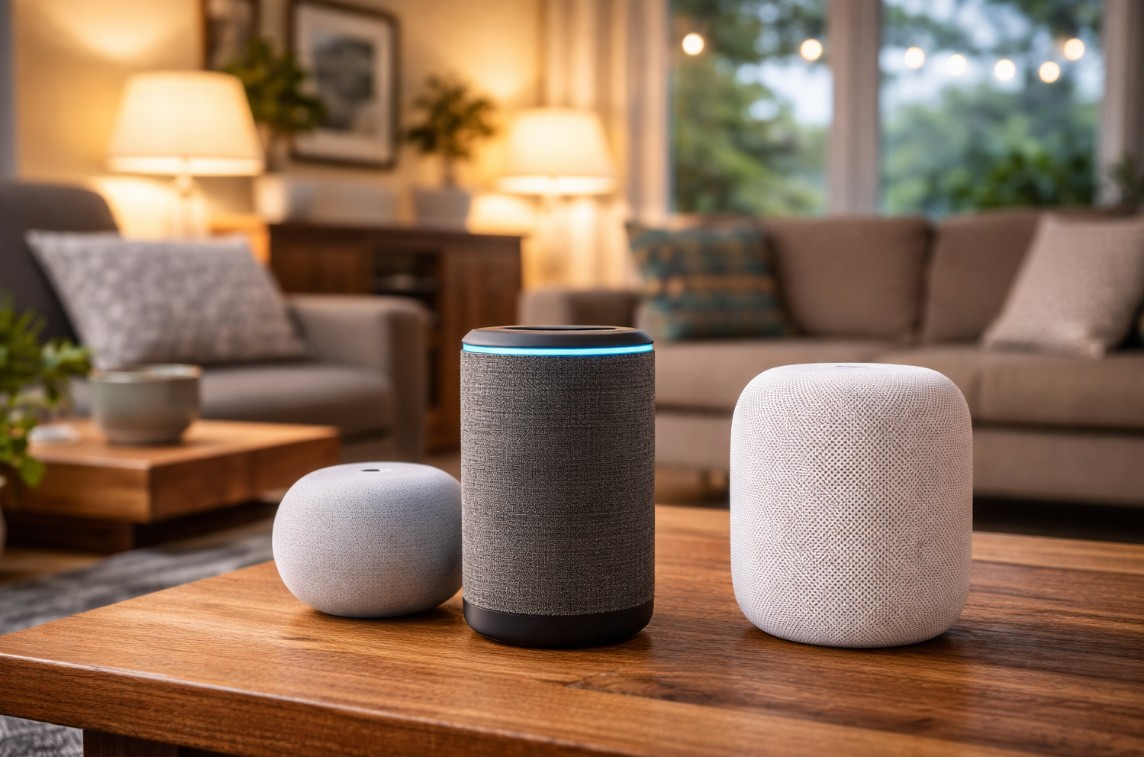
For a brief period in the late 2010s, smart speakers appeared to be the next unavoidable computing platform. Devices like the Amazon Echo, Google Home, and Apple HomePod were marketed as a fundamental shift in how people would interact with technology. Voice, not screens or keyboards, was positioned as the future interface. Smart speakers promised effortless control of homes, instant answers to questions, hands-free shopping, and a more natural relationship with machines.
Today, that excitement has largely evaporated. Smart speakers still exist in millions of homes, but they rarely occupy a central role in daily digital life. For most users, they have settled into a narrow routine of playing music, setting timers, or answering basic questions. The broader ambitions that once surrounded them have faded. Understanding why requires looking beyond hype cycles and into adoption behavior, business models, technical limitations, and shifting user preferences.
The Birth of the Smart Speaker Movement
The modern smart speaker era began when Amazon introduced the Amazon Echo in 2014. At the time, the move appeared unusual. Amazon was primarily known as an online retailer, not as a company shaping consumer hardware or artificial intelligence platforms. The Echo was not just another speaker. It introduced Alexa, a voice assistant designed to operate without screens, buttons, or traditional input methods.
The core idea was simple but ambitious. Instead of unlocking a phone to check the weather, set a reminder, or control a smart device, users could simply speak. Voice assistants already existed, but Alexa pushed the concept further by integrating with a growing ecosystem of third-party services and smart home devices. This openness allowed developers and hardware manufacturers to build skills and integrations that expanded Alexa’s reach well beyond basic commands.
Early adoption, however, was cautious. Many consumers were unsure what role a smart speaker was supposed to play in their homes. The value proposition was novel but abstract. It was not immediately clear why voice control was better than tapping on a phone screen. The category only began to gain traction when Amazon aggressively reduced prices, introduced smaller and cheaper models, and bundled Echo devices into promotions. Accessibility, rather than functionality alone, drove the first wave of mass adoption.
Price Cuts, Ecosystems, and Explosive Adoption
Once Amazon shifted its strategy from premium novelty to mass-market distribution, smart speakers spread rapidly. Discounted Echo Dots became common fixtures in holiday sales and promotional bundles. Many consumers ended up with a smart speaker almost by accident, included as part of a larger purchase rather than sought out intentionally.
This approach worked. By the late 2010s, Amazon had sold over 100 million Alexa-enabled devices. The success signaled to competitors that voice assistants were not a niche experiment but a potentially dominant interface. The goal was not immediate hardware profit. Instead, smart speakers were treated as gateways into larger ecosystems, where long-term revenue would come from services, subscriptions, and commerce.
The strategy mirrored earlier platform plays in technology. Control the interface, and you control the downstream behavior. Voice was expected to become the next layer where users would search, shop, and interact with digital services. For a time, this assumption seemed plausible as adoption numbers surged and smart speakers became one of the fastest-growing consumer tech categories of the decade.
Google and Apple Enter the Arena
Amazon’s early success forced competitors to respond. In 2016, Google launched the Google Home, leveraging its existing strength in artificial intelligence and search. Unlike Amazon, Google did not need to build a voice assistant from scratch. Google Assistant was already capable of handling conversational queries, contextual follow-ups, and complex information retrieval.
For users focused on accurate answers and natural dialogue, Google Home often outperformed Alexa. Its deep integration with Google services such as Search, Maps, and YouTube made it particularly appealing to users already embedded in Google’s ecosystem. Voice interactions felt more flexible and less scripted, which reinforced the perception that voice assistants were steadily improving.
Apple took a different approach. In 2018, it introduced the HomePod as a premium device centered on audio quality rather than affordability. Apple positioned the HomePod to compete with high-end audio brands, emphasizing sound performance over mass adoption.
However, this strategy exposed weaknesses. Siri lagged behind Alexa and Google Assistant in handling complex commands and third-party integrations. The HomePod’s high launch price further limited its appeal. As a result, adoption was significantly lower, leading Apple to discontinue the original HomePod in 2021 before later reintroducing it with modest updates.
The Peak Years and the Illusion of Inevitability
By 2019, smart speakers appeared to be firmly established. Amazon, Google, and Apple had secured visible positions in the market, and nearly half of U.S. households owned at least one device. The category had moved beyond early adopters into mainstream homes. Smart speakers were marketed as essential components of modern living, not just optional gadgets.
Several factors fueled this momentum. Aggressive pricing made entry cheap. Setup was relatively simple. The promise of convenience resonated with users who wanted hands-free interaction while cooking, relaxing, or multitasking. Tech companies reinforced the narrative that voice assistants would soon become central hubs for smart homes, personal organization, and digital services.
Behind the scenes, however, usage patterns told a different story. While ownership numbers were impressive, engagement was shallow. Many users interacted with their smart speakers in limited ways, rarely exploring advanced features or integrations. The gap between what smart speakers were supposed to do and what people actually used them for began to widen.
When the Hype Met Everyday Reality
As novelty faded, smart speakers settled into a predictable usage pattern. Most people used them for a small set of tasks such as playing music, setting timers, checking the weather, or controlling a few lights. These functions were convenient, but they were not transformative. For anything more complex, users often found it faster and more reliable to use a smartphone.
Voice assistants struggled with contextual understanding. Follow-up questions were frequently misunderstood. Commands had to be phrased in specific ways to work correctly. Misinterpretations were common, especially in noisy environments or multi-user households. Over time, these friction points discouraged experimentation.
Instead of replacing screens, smart speakers became background devices. They were helpful in specific moments but rarely essential. The original vision of voice as a primary interface did not materialize because voice alone proved inefficient for many tasks that benefit from visual feedback and precise control.
The Business Model That Never Clicked
One of the most critical issues facing smart speakers was monetization. Amazon and Google sold many of these devices at or below cost, expecting to recover losses through voice-based shopping, advertising, and premium services. This assumption turned out to be flawed.
Consumers showed little interest in purchasing products through voice commands. Voice shopping lacked transparency, comparison options, and the sense of control users expect when spending money. Advertising through voice interfaces also proved challenging, as it risked feeling intrusive and unnatural.
By 2023, Amazon acknowledged that Alexa was losing billions of dollars. Google quietly reduced its emphasis on Assistant-driven hardware. Without a sustainable revenue model, smart speakers became difficult to justify as a strategic priority. They remained in product catalogs but lost their status as flagship initiatives.
Smart Home Integration That Fell Short
Smart speakers were supposed to unify the smart home experience, acting as central controllers for lights, thermostats, and appliances. In reality, the ecosystem remained fragmented. Alexa, Google Nest, and Apple HomeKit did not always work seamlessly together, leading to compatibility issues and inconsistent user experiences.
What should have been simple voice commands often required managing multiple apps, accounts, and settings. For casual users, the complexity outweighed the convenience. Instead of feeling empowered, many users felt frustrated by unreliable automations and inconsistent responses.
These integration challenges further limited how deeply smart speakers were embedded into daily routines. Rather than becoming indispensable controllers, they became optional shortcuts that users relied on only when everything worked perfectly.
Voice Assistants Found Better Homes Elsewhere
While smart speakers struggled, voice assistants themselves continued to improve. The difference was where people chose to use them. Instead of speaking to a dedicated speaker, users increasingly relied on voice assistants built into smartphones, wireless earbuds, cars, and smart televisions.
These contexts made more sense. Phones and wearables are always nearby. Screens provide visual confirmation when needed. Voice becomes a complement rather than a replacement for touch-based interaction. In this environment, standalone smart speakers lost their advantage.
Rather than serving as the central hub for AI, smart speakers were sidelined by more flexible and convenient platforms that integrated voice into devices people already depended on.
The Quiet Decline After 2024
By 2024, it was clear that the smart speaker boom had passed. The devices were not disappearing, but they were no longer driving innovation headlines or major product launches. Updates became incremental. Marketing softened. Expectations were recalibrated.
Smart speakers did not fail outright. They still serve useful purposes and continue to sell. However, they never became an essential category like smartphones or laptops. Users rarely upgrade them, and many devices remain in homes largely unchanged from when they were first purchased.
What was once framed as the future of human-computer interaction has become a background technology. Smart speakers blend into the environment, functional but unremarkable.
A Technology That Overpromised and Under-Delivered
The story of smart speakers is less about technological failure and more about misaligned expectations. Voice interaction is powerful, but it works best as part of a broader interface strategy rather than as a standalone replacement. Smart speakers tried to elevate voice to a primary role before the underlying experience was mature enough to support it.
They remain useful tools, but their golden era has ended. Unless a significant shift redefines how voice assistants integrate with everyday life, smart speakers are likely to remain a niche category. Not forgotten, but no longer central to the future they once promised.