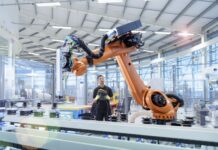
When factory machines break down, production lines halt. Every minute of downtime increases financial pressure, especially when maintenance teams cannot respond on-site immediately. Engineers and technicians often operate across multiple facilities, sometimes hundreds of miles apart, making rapid physical intervention unrealistic.
Remote support technology has reshaped industrial maintenance workflows. Instead of waiting for specialist travel, technicians can now diagnose faults, adjust configurations and guide on-site personnel from any connected location. This operational shift is especially important in manufacturing environments where complex machinery requires expert intervention that is not always available locally.
Choosing the right systems remains critical. Industrial networks manage physical processes, so enabling remote access introduces potential exposure if controls are weak. Organisations must balance accessibility with secure connectivity, ensuring authorised troubleshooting can occur without compromising operational technology infrastructure.
Why Factory Downtime Costs More Than Most Teams Realise
Unplanned stoppages quickly affect manufacturing profitability. Production delays disrupt supply schedules, increase labour inefficiencies and reduce equipment utilisation rates. As a result, plant managers prioritise tools that shorten fault resolution timelines and improve maintenance response coordination.
Mean time to repair often extends significantly when technicians must travel between facilities. Remote diagnostics reduce this delay by enabling immediate fault assessment. Remote management software supports faster response cycles, allowing troubleshooting to begin as soon as alerts are triggered.
As cloud environments mature, adoption of remote support platforms continues to grow across industrial sectors. Organisations recognise that faster diagnostics and reduced travel dependency deliver measurable operational value as manufacturers respond to broader industrial technology transition pressures affecting production resilience and long-term efficiency planning.
How Remote Diagnostics Change Maintenance Response Times
Real-time screen sharing and unattended access allow technicians to begin investigation immediately after system alerts. This removes logistical delays and supports continuous production oversight. In practice, remote IT support contributes directly to improved uptime and more efficient maintenance scheduling.
Industrial-grade platforms extend beyond basic desktop access. Multi-monitor functionality allows technicians to review control interfaces, supervisory systems and machine dashboards simultaneously. Secure file transfer capabilities enable firmware updates, configuration adjustments and scheduled performance optimisation tasks without disrupting production cycles.
For maintenance teams managing equipment faults across multiple locations, TSplus tools for remote support teams enable technicians to establish secure remote sessions quickly, helping reduce response delays and maintain production continuity.
Security Frameworks for OT Remote Access
Zero-trust access models are increasingly applied within industrial remote connectivity strategies. These frameworks require continuous authentication and verification rather than relying on static network trust assumptions. Credential vaulting and multi-factor authentication reduce exposure risks across distributed maintenance environments.
Such controls are widely regarded as the minimum standard for responsible remote access in high-risk environments. Security incidents have demonstrated how weak remote management software protections can expose sensitive operational systems if governance structures are insufficient.
Comprehensive remote access strategies should also include vendor security reviews, regular patch cycles and continuous infrastructure validation processes. Platforms with traceable session governance help maintenance teams maintain secure workflows even as regulatory expectations and cyber risks evolve.
Calculating ROI for Remote Maintenance Deployments
The economic case for remote IT support adoption is increasingly clear across manufacturing sectors. On-site service visits involve travel costs, scheduling delays and extended downtime exposure. Remote intervention reduces these variables, improving cost predictability in the context of rising maintenance expenditure trends across industrial operations.
Return on investment timelines vary depending on facility size and maintenance frequency. However, many organisations observe faster fault resolution rates once technicians gain real-time system visibility. Improvements in Overall Equipment Effectiveness have been reported in facilities integrating structured remote diagnostics into maintenance protocols.
Mid-sized production sites have also documented significant annual cost reductions after implementing remote support solutions. Even moderate decreases in repair response time can produce measurable revenue recovery when scaled across continuous manufacturing operations.
Regulatory Considerations and Vendor Governance
Regulatory oversight of industrial remote access continues to intensify. Legislative initiatives and evolving data protection frameworks are increasing compliance expectations for operational technology environments. These developments are reinforced by wider adoption of industrial cybersecurity culture principles aimed at strengthening governance over vendor access, session monitoring and infrastructure accountability.
Plant leaders must incorporate regulatory risk assessment into technology procurement decisions. Unified remote access platforms improve visibility across distributed maintenance networks, reducing exposure associated with fragmented system deployments.
Industrial maintenance teams are under increasing pressure to restore production quickly while controlling operational risk and cost exposure. Remote support capabilities help organisations respond faster to equipment faults, maintain safer connectivity practices and reduce downtime-related losses. With structured deployment planning and clear governance frameworks in place, manufacturers can strengthen production resilience and move forward with greater confidence in their maintenance strategy.