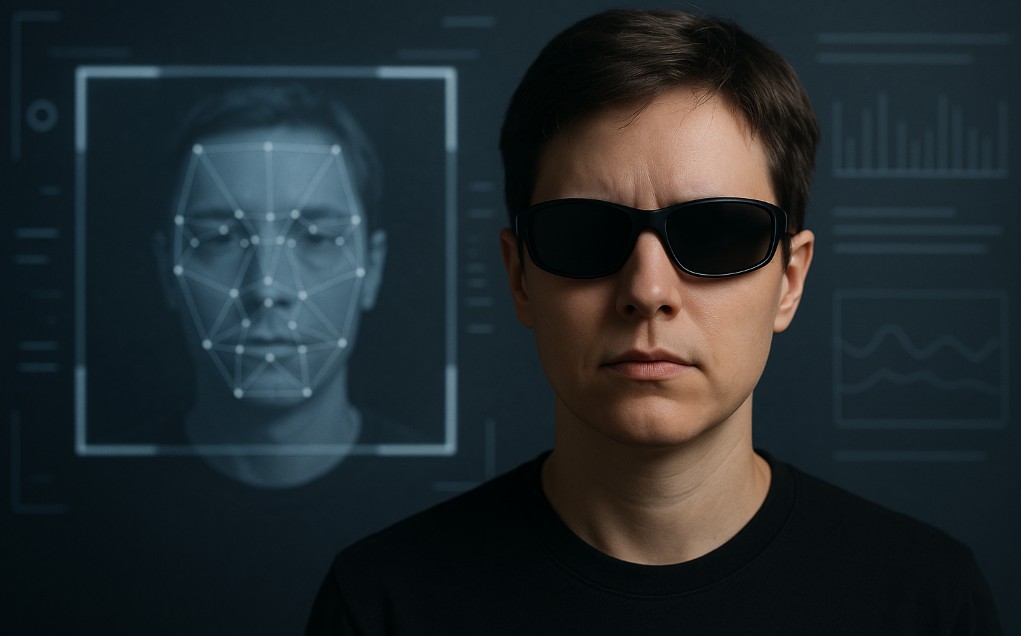
Facial recognition has quietly woven itself into everyday environments, from grocery stores and airports to smartphones and stadiums. Although many people appreciate the convenience it brings, others worry about the erosion of personal privacy. As retail chains, event venues, and smart devices expand their use of computer vision, a growing number of consumers want practical ways to reduce how often they are identified or tracked in public.
Recent tests exploring the mechanics of facial recognition, particularly the role of infrared imaging, offer an important look at how these systems work and what can realistically be done to confuse them without engaging in harmful or illegal behavior. This article synthesizes those insights into a detailed, research-driven overview of modern facial recognition and today’s emerging consumer-level countermeasures.
Understanding the Expanding Reach of Facial Recognition
Facial recognition is no longer a specialized tool restricted to border control or law enforcement. Its adoption has accelerated across diverse industries, largely without public awareness. Before understanding how one might limit unwanted identification, it is helpful to understand just how pervasive the technology has become and why so many organizations are rapidly embracing it.
Retailers, for example, increasingly deploy large networks of cameras for theft prevention, personalized advertising, and customer analytics. Some grocery chains have explored embedding small cameras directly into digital shelf labels, enabling continuous observation of shoppers at close range. These systems promise insights into traffic flow and product engagement but raise understandable concerns about data retention and consent. Similar systems enhance security at concerts, hotels, gyms, and corporate offices, while vehicles equipped with driver-monitoring cameras rely on facial scans to detect fatigue or ensure the driver is paying attention.
This growing infrastructure means that opting out of being observed can be difficult. People may choose not to use facial recognition on their phones, but they cannot easily avoid cameras placed in public or semi-public spaces. As privacy concerns rise, individuals are increasingly curious about how these systems function and whether there are simple, legal techniques to reduce their accuracy.
How Facial Recognition Works at a High Level
Before evaluating whether countermeasures are effective, we must understand the core stages of facial recognition technology. These steps remain broadly similar across most modern systems, even if the algorithms vary in sophistication.
Facial recognition begins when a camera captures an image or video frame. This could be from a smartphone, a security camera in a store, or a surveillance system in a transit hub. Since the act of being photographed in public spaces is often unavoidable, preventing this first step is nearly impossible.
The next stage involves identifying the presence of a face. Algorithms analyze pixel patterns to determine whether any human faces appear in the captured image. While this step is generally reliable, it is not perfect. Systems occasionally interpret objects or shadows as faces or fail to detect actual faces depending on pose, lighting, or occlusion.
If a face is detected, the algorithm attempts to extract key features. This stage is crucial because modern systems rely on geometric measurements derived from landmarks such as the eyes, the nose bridge, the corners of the mouth, and the edges of the jawline. These measurements create a numerical representation of the face, effectively transforming it into a set of ratios.
The resulting set of measurements is compared against known images stored in a database. In consumer devices such as smartphones, the comparison is limited to an enrolled identity. In commercial or law enforcement settings, the comparison might span thousands or even millions of stored profiles.
Finally, the algorithm outputs a similarity score indicating the probability of a match. While people often assume facial recognition is binary, it actually operates on confidence levels. That means recognition systems may accept or reject matches based on configurable thresholds.
Understanding these stages reveals the weak points: interrupting the feature extraction process is the most promising route for anyone attempting to reduce the chance of being recognized.
Why Infrared Cameras Change Everything
Many assume that disguises such as wigs, hats, or dark sunglasses are enough to prevent recognition. While such tactics may have helped in the early days of computer vision, they are significantly less effective now. The key reason is the widespread adoption of infrared imaging.
Infrared light falls just outside the visible spectrum, but many cameras designed for low-light conditions rely on infrared LEDs to illuminate subjects. Unlike visible light, infrared can penetrate some types of lenses that appear opaque to the human eye. This capability fundamentally changes how facial recognition systems perceive a face.
Security cameras and even consumer devices like smartphones often use infrared sensors to ensure consistent performance in varied lighting conditions. For example, a smartphone can recognize its owner in near-total darkness because its infrared projector illuminates the face without emitting any visible light. As a result, dark sunglasses will not reliably hide the eyes, because many lenses that appear fully opaque in visible light are transparent under infrared illumination.
This has major implications. The region around the eyes contains many of the most important anatomical landmarks used in feature extraction. If the eyes are visible in infrared, facial recognition can often succeed even when other facial features are partially disguised.
The only reliable way to interfere with infrared-based recognition is to block or reflect infrared light effectively, which is more challenging than simply wearing tinted lenses.
Evaluating Common Misconceptions About Disguises
Because facial recognition has become ubiquitous, people frequently search for easy ways to protect their identity. Many of these attempts, however, rely on misunderstandings about how the technology works. Below is a closer look at why common approaches are often ineffective.
Wigs and fake beards rarely disrupt recognition because algorithms focus on the geometry of the face rather than the hair. Even dramatic changes to hairstyle typically do not interfere with eye, nose, and mouth landmarks.
Traditional sunglasses or fashion eyewear also fail to provide meaningful protection when infrared sensors are involved. Even the darkest visible-light lenses allow infrared wavelengths to pass through. What blocks your eyes from other people may not block them from cameras.
Low-cost blue-light blocking glasses, popular for computer use, provide no additional protection. Their coatings are optimized for visible wavelengths associated with eye strain, not infrared wavelengths used by most recognition systems.
These realities emphasize the need to test approaches specifically designed to counter infrared sensing and disrupt key facial features.
Testing IR Blocking Glasses as a Privacy Tool
Because the eyes play such a critical role in facial recognition, one proposed solution is wearing eyewear that blocks infrared light. Several types of IR blocking safety glasses are available at low cost, although most are designed for industrial environments rather than casual daily use.
Early tests using IR blocking lenses demonstrate that they can indeed prevent infrared-based systems from visualizing the eyes. This is significant because if the eyes are fully obscured, the feature extraction step breaks down.
However, most industrial-grade IR lenses are extremely dark. Options with higher optical density block nearly all visible light, making them impractical for most activities. Glasses rated as shade 5.0, for example, can block more than 96 percent of visible light. Even shade 3.0 options, which allow slightly more visibility, remain too dark for indoor wear and are only marginally usable outdoors on bright days.
Despite these limitations, the tests confirmed a key finding: when worn, the lenses prevented a smartphone’s infrared-based face authentication from unlocking. This means the eyes were completely hidden from the device’s infrared sensors. The demonstration validates IR-blocking eyewear as one of the few methods that reliably obstruct critical facial landmarks.
The Rise of Stylish IR Blocking Glasses
Because traditional IR safety glasses are bulky and unattractive, a few specialty eyewear brands have started developing more fashionable alternatives designed specifically to counter infrared-based surveillance.
Some of these models use lighter IR-blocking lenses that remain visually transparent enough for everyday use. Others incorporate reflective coatings on the frames themselves, bouncing infrared light away from the camera. Tests using several of these consumer-focused designs show promising results. Even when the eyes remained visible in normal lighting, infrared images captured by security cameras failed to reveal them.
More importantly, these glasses were comfortable enough to wear indoors or while shopping, making them much more feasible than industrial safety lenses. For people seeking a blend of privacy and everyday usability, these products represent a meaningful advancement.
Both lens-only and reflective-frame designs prevented a smartphone from authenticating the wearer, reinforcing the principle that infrared interference remains one of the strongest consumer-level options for disrupting automated recognition.
Surprising Results from Reflective Materials
While infrared blocking lenses are effective, another unexpected avenue for privacy involves highly reflective materials commonly used in cycling apparel. These fabrics appear dull gray under normal conditions but become intensely bright when exposed to concentrated light such as a camera flash or headlights.
An experiment using a hat made from such material showed that under both visible and infrared light, the face remained clearly visible. This outcome suggested the reflective surface alone would not interfere with facial recognition. Surprisingly, a smartphone equipped with an infrared facial recognition system failed to unlock when the reflective hat was worn. The reason is likely tied to how intense infrared reflections overwhelm the sensor or distort the contours it attempts to measure.
A control test with a regular hat showed no such effect. This finding indicates that highly reflective materials may, under certain conditions, introduce enough visual noise to confuse algorithms that rely on structured infrared illumination.
Although not a guaranteed method against all recognition systems, the result highlights an intriguing and unconventional way to interfere with machine perception. It suggests that future privacy-focused clothing might incorporate materials engineered to scatter or reflect infrared in unpredictable ways.
Why These Methods Work on Some Systems but Not Others
It is essential to treat these findings with nuance. A technique that blocks infrared sensors on a smartphone may not defeat more advanced recognition systems used in retail chains or transportation hubs. Different systems use different wavelengths, lighting arrangements, and algorithms.
Smartphones rely on structured infrared patterns and depth sensing, so blocking the eyes or reflecting infrared disrupts the geometry needed for authentication. In contrast, large-scale surveillance systems often combine visible-light cameras with separate infrared sensors, and some may incorporate machine learning models robust enough to handle partial occlusions.
Therefore, while IR blocking glasses and reflective materials show promise, they should be viewed as tools for improving privacy rather than foolproof anonymity measures. The tests illuminate what is theoretically possible but do not guarantee uniform outcomes across all recognition platforms.
Ethical Considerations and Responsible Use
Strategies for reducing exposure to automated recognition raise important ethical considerations. Privacy-conscious individuals may simply wish to avoid being tracked in commercial environments, yet the same techniques could be misused if applied with malicious intent. Any discussion of countermeasures must acknowledge the distinction between legal privacy protection and attempts to evade law enforcement or commit unlawful acts.
The experiments referenced here are explicitly framed around personal privacy in consumer contexts. They do not encourage or condone actions that obstruct security systems designed for public safety. Responsible use involves understanding local laws, respecting private property policies, and recognizing that some environments legitimately require identity verification.
At the same time, consumers have reasonable expectations of transparency and consent when their biometric data is collected. As facial recognition becomes more widespread, public conversations about rights, limitations, and acceptable use will become increasingly important.
The Path Ahead: Innovation, Research, and Regulation
The rapid expansion of facial recognition systems, combined with new methods for disrupting them, creates a dynamic landscape. Policymakers, technologists, and privacy advocates must navigate emerging tensions between convenience, security, and civil liberties.
Several future developments are likely:
- More companies will explore IR-resistant or reflective clothing designed specifically for privacy.
• Hardware manufacturers may adjust sensor technology to counter these new forms of interference.
• Regulatory bodies may mandate clearer disclosure when facial recognition is used in commercial spaces.
• Researchers will continue exploring adversarial techniques that selectively confuse algorithms while remaining subtle to human observers.
These competing trends reflect a broader debate about how society should manage biometric technologies. Facial recognition offers undeniable benefits, but it also introduces risks that require thoughtful safeguards.
Conclusion
As facial recognition becomes woven into daily life, understanding how it works and how it can be disrupted empowers individuals to make informed choices about their privacy. The experiments discussed here reveal two important insights: infrared plays a central role in modern facial recognition, and blocking or manipulating infrared signals can meaningfully reduce the accuracy of these systems. IR blocking glasses and reflective materials show particular promise, even if their effectiveness varies across different platforms.
While these tools do not guarantee anonymity, they highlight a growing movement toward personal agency in an era of pervasive sensing. Continued research, responsible use, and open public dialogue will determine how society balances the advantages of facial recognition with the fundamental right to privacy.