





Making the most of business data: Practical tips for tech-shy leaders
In the business world, data is paramount for business leaders and managers to make decisions based upon recorded facts, statistics, and trends for the...

Top 10 industrial automation companies in the world
Manufacturers today face a multitude of challenges. On the one hand, they need to keep their production running, ensure product quality, scale production up...

Top 9 drone manufacturers in the world
The major interest in drones started when the US began to use military drones, with the miniaturization of sensors and other technologies in the...
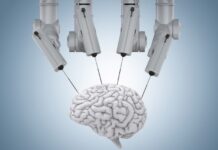
The future of robotics in neurosurgery
Neurosurgery is a specialty that involves operating under a microscope for high precision and careful tissue handling. The brain is a 3-dimensional structure enclosed...

AI in manufacturing: Smarter, nimbler, and less prone to error
Artificial intelligence (AI) applications, ranging from virtual assistants to advanced robotics, are on the verge of disrupting end-to-end value chains in manufacturing as demand...

Three types of industrial automation systems
Modern society has become so dependent on automation that it is difficult to imagine life without it. As a cross-sectional discipline, automation encompasses virtually...

8 reasons why Python is a better language for AI
Artificial intelligence (AI) and machine learning (ML) capture more attention from everywhere with each passing day. Who would have imagined that a self-driving vehicle...

Why you should buy robotic vacuum cleaners
Our houses are slowly becoming smarter and more automated, thanks to home automation. Autonomous tools like robotic vacuum cleaners make their presence felt increasingly...

Leveraging Machine Learning (ML) and 5G in industrial manufacturing
Combining two distinct technologies - 5G and machine learning (ML), opens the doors to many exciting industrial applications, especially in today’s communication landscape.
This unprecedented...

Why artificial intelligence (AI) is the new digital frontier
Artificial intelligence (AI) is on the verge of causing the next wave of digital disruption, and businesses should get ready now. We can already...

How to choose the best robot vacuum cleaner
Are you looking for a hassle-free way to stay on top of your household hoovering? Once an expensive gadget, robot vacuums are now available...

Potential safety hazards of rehabilitation robots
As new technologies become available and the need for physical rehabilitation grows, rehabilitation robots have become increasingly relevant in recent years. A rehabilitation robot...
