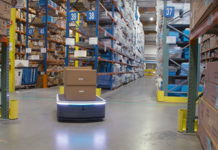
In 2021, warehouse automation was the hottest segment in industrial technology. Venture capital flowed freely. Valuations were stratospheric. Every logistics operator was announcing a robotics programme. Then the cycle turned. North American robot orders dropped 37% in Q2 2023. Warehouse construction declined 25%. Locus Robotics filed for Chapter 11 bankruptcy in February 2023 after reaching a $2 billion valuation. Shopify sold 6 River Systems to Ocado at a significant loss. IAM Robotics pivoted and rebranded. The companies that had raised capital at 2021 multiples spent 2023 and 2024 rebuilding the business case from first principles.
That correction is now complete. The global warehouse automation market stands at $34 billion in 2026 and is growing again — but the character of the growth has changed. Operators are buying differently: smaller initial deployments, modular systems, RaaS subscriptions over capital purchases, and a hard focus on integration and software orchestration before hardware scale. The companies that survived the downturn by focusing on operational ROI rather than narrative are the ones growing fastest in 2026. The ones that did not are cautionary case studies in how quickly a hype cycle corrects.
This article maps what the correction revealed, which technologies emerged strengthened, what the hidden costs still catching buyers off guard look like, and how the market is being restructured for the next phase of growth.
The Boom, the Correction, and What Each Revealed
The 2021 boom had real structural foundations. E-commerce volumes had doubled in two years. Labour costs were rising sharply — wages climbed 7–9% year-on-year in 2024 in logistics, representing the largest sustained wage inflation in the sector in decades. The pandemic had exposed the brittleness of manually operated warehouses under volume surge. Every major operator had a genuine automation problem to solve.
What the boom inflated was the timeline and the total cost expectations. Operators bought into projections of rapid, low-friction deployment. Startups promised payback periods that assumed perfect integration, peak utilisation from month one, and legacy systems that would interface cleanly with new platforms. None of those assumptions held consistently in practice. The LogisticsIQ analysis is direct: “In 2021, warehouse automation companies had a huge order intake; however, revenue growth was constrained by supply chain disruptions. The industry entered 2022 with a backlog of orders, which was eventually reduced by 2023 due to macroeconomic uncertainties.”
What broke first was unit economics at the startup layer. The AMR market attracted dozens of well-funded entrants between 2018 and 2022 on the assumption that a large, growing market would support multiple winners. Only 18% of small warehousing tech startups secured follow-on funding in 2024, according to CB Insights, making mergers or acquisitions essential for survival. Consolidation followed: Zebra acquired Fetch Robotics, ABB acquired ASTI Mobile Robotics and Sevensense, Ocado absorbed 6 River Systems, and Rockwell Automation acquired Clearpath Robotics. The market did not shrink — it concentrated.
What the correction also revealed, for buyers, was the infrastructure gap. Deployments stalled not because the robots did not work but because the WMS could not orchestrate them, the network could not support them, or the floor layout required modifications that had not been budgeted. Integration failures cause the most costly and disruptive go-live delays in warehouse automation — and they are still the most under-addressed element of every project budget in 2026.
- $34.17B warehouse automation market in 2026 — Mordor Intelligence — growing to $65.74B by 2031
- 80% of warehouses still operate without automation — Network Installers 2026 — majority of global footprint still manual
- 37% decline in N. American robot orders in Q2 2023 — Association for Advancing Automation — the correction peak
What Survived the Hype Cycle — and Why
The technologies and companies that came through the 2023–2024 correction stronger share a consistent set of characteristics: documented ROI in live deployments, modular architecture that allowed incremental rather than all-or-nothing investment, and a software layer that made the system more valuable over time rather than static.
AutoStore and Cube Storage AS/RS
Automated Storage and Retrieval Systems — specifically the cube-storage AutoStore architecture — emerged from the correction as the fastest-growing technology segment in warehouse automation. The reasons are structural: cube storage solves the specific problem that is worsening for every urban distribution operator — space. AutoStore systems can utilise up to 90% of usable cubic storage space, compared to 25–40% for conventional racking. In markets where warehouse rents are rising and greenfield sites are increasingly unavailable, that density advantage is not incremental — it is transformative.
In November 2025, AutoStore signed a $200 million framework agreement with a US 3PL to install 50 cubic-storage systems across 25 sites by 2026 under a RaaS model. That deal — 50 sites, structured as operating expenditure — is the commercial template that is repeating across the sector: large-scale deployment, modular roll-out, subscription pricing that removes the capex barrier from the buyer’s balance sheet.
Symbotic: The Large-DC Platform
Symbotic is the most significant enterprise-scale success story in warehouse automation in 2026. The company delivered its first profitable fiscal year in FY 2025 with $1.02 EPS and $618.5 million in quarterly revenue at 20.6% gross margins — a milestone that validated the thesis that full-DC automation can sustain commercial economics, not just VC-subsidised growth. In January 2026, Symbotic agreed to acquire Walmart’s Advanced Systems and Robotics business alongside an expanded commercial agreement, deepening its anchor customer relationship.
The honest risk profile for Symbotic remains significant: heavy Walmart concentration, a class-action lawsuit, material weakness disclosures in FY24, and a valuation still demanding near-flawless execution. But as a proof of commercial viability at enterprise scale, the FY25 profitability milestone matters structurally for the broader market.
AMRs: Consolidation Has Produced Stronger Players
The AMR market is smaller in vendor count than it was in 2022 — and more commercially sound. Geek+ leads in deployed fleet size globally. GreyOrange’s AI-driven approach to end-to-end order automation delivers peak efficiency gains of 30–180% and deploys in 4–6 weeks. Locus Robotics, restructured from its 2023 bankruptcy, has refocused on its core 3PL and retail customers and is demonstrating the fleet utilisation metrics that justify continued expansion. The companies remaining in the AMR market after the correction have the unit economics to support long-term deployment — the ones that did not are gone or absorbed.
The AMR market stands at $2.75 billion in 2026 and is projected to reach $7.07 billion by 2032 at a 14.4% CAGR. The growth is driven by logistics and 3PL — the segment with the highest CAGR — as operators who deferred investment during 2023–24 return to market with better-defined requirements and more realistic deployment timelines.
“Even in industries like CPG you are seeing some really significant changes. They didn’t have e-commerce a few years ago and now it’s their fastest growing channel. With modern robotics you can use the same workers to accomplish a 400% improvement in throughput without expanding the facility.” — Andy Williams, VP North America, Exotec
The 2026 Technology Landscape: What to Buy, What to Watch, What to Wait On
The table below maps the primary warehouse automation technologies against commercial readiness, ROI profile, and the buyer profile they serve in 2026:
| Technology | 2026 Status | Typical ROI | Who It Fits | Lead Players |
| AMR fleets (goods-to-worker) | Proven — commercial scale | 12–24 months | Mid-to-large DCs, 3PLs | Geek+, GreyOrange, Locus, 6RS (Ocado) |
| AutoStore / cube storage (AS/RS) | Proven — fastest growing segment | 18–36 months | High-SKU, space-constrained ops | AutoStore, Exotec Skypod, Swisslog |
| Symbotic / full-DC automation | Proven at scale — high capex | 5–8 years | Walmart-scale DCs, large retailers | Symbotic, Dematic, Honeywell |
| Goods-to-person picking stations | Proven — strong ROI data | 12–24 months | E-commerce fulfilment, pharma | Kardex, Hänel, AutoStore GTP |
| AI-powered piece picking robots | Maturing — ~90% accuracy at scale | 24–48 months | High-volume mixed-SKU picking | Covariant, Berkshire Grey, Nimble |
| Humanoid robots (DC) | Early deployment — watch list | 5–10 years est. | Large 3PLs with scale to pilot | Agility Digit, Figure, 1X |
| AI WMS / WES orchestration | Proven — highest near-term ROI | 6–18 months | All automated facilities | Made4net, Manhattan, Blue Yonder, SAP |
Sources: Mordor Intelligence, MarketsandMarkets, Standard Bots, Supply Chain Management Review, Made4net 2026 Logistics Automation Study. ROI ranges indicative; actual results vary by deployment scale and utilisation.
The AI WMS/WES orchestration row is the one most operators underweight. Logistics Management’s 2026 automation study found that 57% of respondents use a WMS and 43% are planning to upgrade or implement one in the next 24 months. The reason: as robotics picking, goods-to-person systems, and AS/RS deployments expand, the WMS becomes the orchestration engine that makes those investments work together — or fail to. A picking robot that moves at three times human speed is worthless if the inventory data it is acting on is inaccurate.
The Hidden Costs That Are Still Derailing Deployments in 2026
The single most reliable predictor of a failed or underperforming warehouse automation deployment in 2026 is inadequate infrastructure assessment before the project starts. This was true in 2021 and it is still true today — the correction did not fully fix it because infrastructure costs are not in vendor quotes and most buyers do not know to ask.
| Hidden Cost Item | Typical Range | Usually Quoted? | Why It Matters |
| Network infrastructure upgrade | $30,000–$150,000 | Rarely | AMRs require high-bandwidth Wi-Fi across entire facility; legacy networks fail under load |
| WMS upgrade or replacement | $50,000–$500,000+ | Never | Legacy WMS cannot orchestrate robots; integration stalls go-live by months |
| Systems integration engineering | $20,000–$200,000 | Partially | Each WMS/ERP/TMS connection point is a potential failure mode |
| Facility modifications (brownfield) | $25,000–$300,000 | Rarely | Floor leveling, charging stations, aisle reconfiguration, safety zones |
| Change management & retraining | $10,000–$80,000 | Never | Worker resistance and inadequate training are top causes of deployment underperformance |
| Peak-capacity overprovisioning | 15–30% of system cost | Sometimes | WMS designed for 1,000 orders/hr stalls at 2,500 during peak; cascading failures ripple to robotics |
| Year 2–5 maintenance & upgrades | 8–15% of capex/year | Rarely | Software licences, hardware refresh, fleet expansion to maintain ROI as throughput grows |
Sources: Network Installers Warehouse Automation Statistics 2026, Warehouse Automation.org Brownfield Integration Guide (May 2026), Kardex Integrated Warehouse Systems Survey 2025.
The network infrastructure line is the one that generates the most surprised reactions at go-live. Network upgrades cost $30,000 to $150,000 per facility and are almost never included in automation vendor quotes. AMRs require high-bandwidth, low-latency Wi-Fi coverage across the entire facility — including areas that have never needed reliable network connectivity. Less than 10% of mobile device issues on the warehouse floor are ever reported to IT, meaning most operators have no accurate baseline of their actual network performance under load. Deploying a 50-unit AMR fleet into an unassessed network is the most common cause of a deployment that works in the demo and fails in operation.
The WMS replacement or upgrade cost is the largest single hidden item for brownfield deployments. Brownfield integration requires understanding your network, software environment, and how new tools will connect to existing WMS and WCS — and many facilities discover during that process that their legacy WMS was not designed to handle the orchestration complexity that robotics demands. Replacing or significantly upgrading a WMS mid-project is a $50,000 to $500,000 item that can add six months to deployment timelines.
Change management is the cost that never appears in any table but undermines more deployments than any technical failure. Worker resistance — specifically the fear of job displacement that drives reduced adoption effort and workarounds that circumvent the system — is a documented ROI killer. Three out of four respondents in Kardex’s 2025 integrated warehouse survey say that integrating warehouse systems is essential to realising the full benefits of automation. The gap between recognising that and operationalising it through genuine change management investment is where deployments fail.
The Frontier: AI Piece Picking and What It Takes to Get There
The technology that would most radically change warehouse economics — a robot that can reliably pick any individual item from any bin, in any orientation, at human speed — is the hardest unsolved problem in warehouse robotics. It is also the area attracting the most R&D investment and the most meaningful recent progress.
Covariant, Berkshire Grey, and Nimble are the leading piece-picking robotics companies in 2026. Covariant’s approach — teaching robots to handle items they have never seen before using foundation model-based generalisation — represents the VLA model architecture applied to the picking problem. The reported accuracy rates at commercial scale are approaching 90% on mixed-SKU operations, which sounds impressive until it is benchmarked against the 99.9%+ accuracy that human pickers consistently achieve in well-run facilities.
The gap between 90% and 99.9% is not a marketing rounding issue — it is the difference between a robot that helps and a robot that creates downstream quality problems in a fulfilment operation where a mis-picked item triggers a return, a customer complaint, and a carrier rebill. The piece picking frontier will cross commercial viability when accuracy reaches 99%+ across a representative range of SKUs — and the combination of VLA model architectures and high-volume training data is creating a credible path to that threshold over the next 18–36 months.
“Piece picking robots significantly reduce labor costs and increase throughput — but the accuracy threshold for commercial deployment in mixed-SKU fulfilment is higher than most demos suggest.” — LogisticsIQ Warehouse Automation Market Report
What the Next Three Years Look Like
The 2026 warehouse automation market is not a repeat of 2021. The structural drivers are stronger, the technology is more mature, and the buyer is more sophisticated. The growth trajectory through 2029 has four defining characteristics.
RaaS will become the default procurement model for mid-market operators. ABI Research predicts 1.3 million RaaS installations by 2026 generating over $34 billion in revenue. The model’s appeal is structural, not temporary: it aligns vendor incentives with operator performance (vendors maintain systems they own), converts capital expenditure to operating expenditure, and enables fleet scaling without balance sheet impact. 72% of logistics firms are already adopting RaaS according to Deloitte — the question is no longer whether it becomes standard but how quickly it displaces traditional purchase models in each market segment.
Software orchestration — WMS and WES — will generate more ROI than hardware additions for most mid-maturity deployments. The facilities that installed AMR fleets or AutoStore systems in 2020–2022 are discovering in 2026 that the next increment of performance improvement comes not from adding more robots but from upgrading the orchestration layer that coordinates robots, human workers, inventory data, and fulfilment logic. McKinsey notes that “software is no longer a static tool — it’s a platform that executes and orchestrates work.” For operators with existing automation, this is where the 2026 budget conversation should start.
Humanoid robots will move from watch list to active pilot for large 3PLs. The Agility Robotics Digit deployment at GXO/Spanx — performing tote transfers at $10–12/hour operational cost versus $30/hour for human labour — is the template that large 3PLs are evaluating. The 3-year timeframe is not for mainstream deployment. It is for select, constrained-task deployments in facilities where the specific economics and task profile justify the current technology generation. The Supply Chain Management Review’s 2024 assessment that humanoid deployment is “five to ten years from becoming a significant factor” in warehouse operations is the honest timeline for broad adoption. Pilot deployment in narrow applications is happening now.
The consolidation at the vendor level will continue. Only 18% of small warehouse tech startups secured follow-on funding in 2024. The companies without a differentiated software layer, a defensible customer base, or a clear path to positive unit economics will be acquired or shut down over the next 24 months. The beneficiaries are the large integrators — Dematic, Honeywell Intelligrated, Vanderlande, Swisslog — and the platform companies that have built software ecosystems rather than point solutions.
The Bottom Line
The warehouse automation market survived its first serious hype cycle correction, and what survived is structurally sounder than what came before it. AMR fleets, cube storage AS/RS, full-DC automation at enterprise scale, and AI-orchestrated WMS systems are all delivering documented commercial ROI. The boom-era promise — rapid, low-friction, high-return automation for any facility — was overstated. The more specific promise — significant labour cost reduction, throughput improvement, and capacity expansion for operators who invest in the infrastructure and integration work that automation demands — is well-supported by the evidence.
Eighty percent of the world’s warehouses still operate without meaningful automation. That gap is the addressable market. The structural forces closing it — labour costs, e-commerce volumes, last-mile delivery expectations, and the improving economics of RaaS deployment — are not cyclical. The hype cycle corrected the timeline. It did not change the direction.
Key Sources
- Mordor Intelligence — Warehouse Automation Market 2026–2031
- Network Installers — 50+ Warehouse Automation Statistics & ROI Data (2026)
- Sellers Commerce — Warehouse Automation Statistics 2026
- LogisticsIQ — Warehouse Automation Market Research & Forecast
- Made4net — Logistics Management 2026 Automation Study
- Kardex — Integrated Warehouse Systems Survey 2025
- Warehouse Automation.org — Brownfield Integration Challenges (May 2026)
- Supply Chain Management Review — Warehouse Automation Poised to Rebound (Dec 2024)
- MarketsandMarkets — Autonomous Mobile Robots Market 2026
- The Robot Report — Locus Robotics Reduces Staff (2024)
- Locus Robotics — Warehouse Automation Predictions 2025
- 24/7 Wall St. — Symbotic Profitable While Amazon Builds Its Own (Jan 2026)
- Standard Bots — Top 12 Warehouse Robotics Companies in 2026
- FDataBot — Top 10 AMR Companies in 2026
- Interlake Mecalux — Logistics Trends 2026 (Nov 2025)
- MCF Corporate Finance — Warehouse Automation Market Outlook & M&A (2025)
- Agility Robotics — Broadens Relationship with Amazon (official)